
Key Takeaways
There’s a subtle crisis in how the world treats chronic pain — and unless we change the way we think, many people will remain trapped in cycles of pil...
There’s a subtle crisis in how the world treats chronic pain — and unless we change the way we think, many people will remain trapped in cycles of pills, surgeries, and disappointment.
Over decades at our clinics in Malaysia, we’ve paired a potent anti-inflammatory Chinese herbal formulation with physiotherapy — not as a substitute for modern medicine, but as a strategic partner to it. Today, modern science is beginning to confirm what we’ve observed for years: pain isn’t just a structural problem, and effective treatment has to target more than anatomy.
🔍 The Problem with “Fixing Pain”
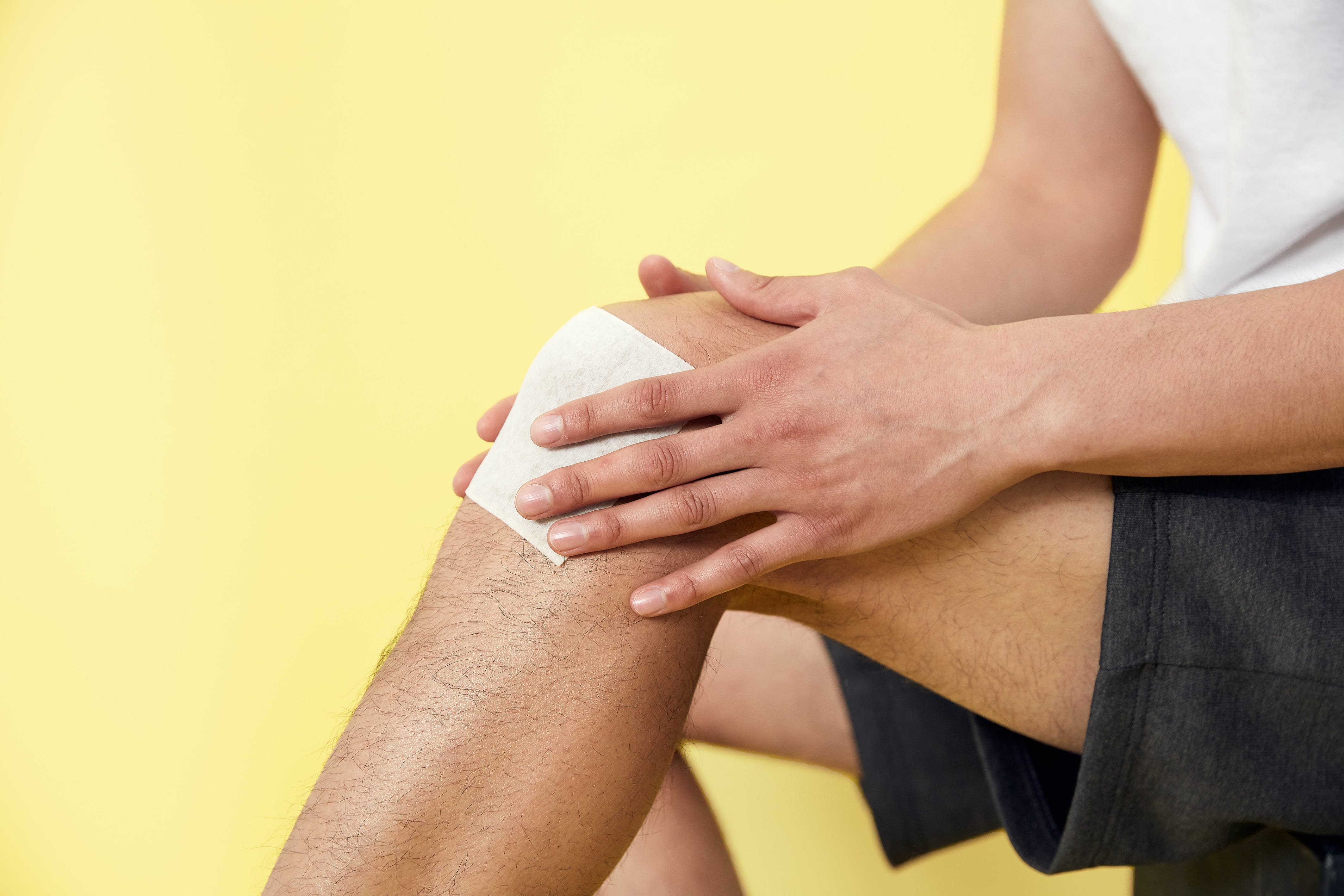
Many pain treatments today are still based on a mechanical model: if a scan shows a disc bulge, a meniscus tear, or a degenerative joint, then cutting, fusing, or replacing the structure should make the pain disappear.
But the evidence tells a different story:
Imaging doesn’t always match pain. Up to 80% of adults over 50 have disc bulges or herniations on MRI but report no pain. Meniscus tears are common in people with no knee symptoms. Structure does not always equal pain.
Surgeries often fail to resolve pain.
In the U.S., more than 200,000 spinal surgeries over three years were flagged as low-value or unnecessary, costing Medicare an estimated $2 billion.
60% of spinal surgeries recommended in one study were later judged unnecessary.
Knee arthroscopy for degenerative disease has shown no clear benefit over placebo in high-quality trials.
Up to 46% of lumbar fusion patients report persistent or increased pain within two years after surgery — a condition known as “failed back surgery syndrome.”
Chronic pain isn’t just structural. Even when surgery succeeds mechanically, pain can persist or migrate because the underlying inflammatory and neural processes haven’t been addressed.
Modern pain guidelines in many countries now recommend non-drug, non-invasive approaches as first-line treatment— not because of ideology, but because of outcomes.
⚙️ Why Non-Invasive Approaches Work Better for Chronic Pain
Surgery targets structure. But chronic pain lives in systems — inflammation, nerve sensitization, movement compensation, and impaired healing. That’s why cutting into a disc or knee doesn’t necessarily turn the pain off.
1. Inflammation drives pain more than anatomy.
Inflammatory mediators (IL-6, TNF-α, IL-1β) sensitize pain pathways and prolong pain long after the initial injury has healed. This process, not the visible tear or bulge, is often what patients actually feel.
2. Sensitization and movement patterns sustain pain.
Chronic pain alters motor control, posture, and muscle recruitment. These maladaptations feed the pain loop — something no scalpel can fix.
3. Non-invasive treatments target biology and function.
By reducing inflammation and retraining movement, we address the mechanisms that drive persistent pain, not just the structures where it shows up.
🌿 How Our Herbal + Movement Approach Fits the Science
We don’t reject medicine. We align with it at the mechanistic level:
Targeting inflammation at the source.
Our herbal formulation has demonstrated anti-inflammatory effects in vitro, inhibiting IL-6, IL-1β, TNF-α, and P38 MAPK activity in human cell studies. These are the same pathways targeted by modern anti-inflammatory drugs — but without systemic side effects.Improving local circulation and tissue healing.
Reducing inflammation creates conditions that allow tissue to repair and nerve sensitivity to down-regulate — rather than escalating trauma with invasive procedures.Retraining dysfunctional movement.
Physiotherapy addresses altered motor patterns and load distribution. Combined with inflammation control, this interrupts pain loops and reduces recurrence.Low risk, adaptable treatment.
Non-invasive therapies can be adjusted over time. Surgery, by contrast, is irreversible — and carries risks like infection, scarring, and failed outcomes.Systemic resilience, not escalation.
Our goal isn’t to keep patients dependent on us. It’s to restore enough function and reduce pain sufficiently that they need us less over time, not more.
🧠 What This Means
The global rethink around chronic pain isn’t about nostalgia for tradition. It’s about aligning treatment with what science now understands:
Pain is more neuro-inflammatory and functional than purely mechanical.
Non-invasive approaches that target inflammation and movement produce better outcomes for many chronic pain patients.
Surgical and pharmaceutical escalation often adds risk without solving the root.
What we’ve practiced for decades — herbal anti-inflammatory treatment paired with physiotherapy — fits squarely within this modern framework.
The difference is: we’ve been applying it in real patients, at scale, for 45 years.
🚀 The Turning Point: What This Publication Will Explore
The science behind our herbal formulations — mechanisms, lab studies, and clinical insights
Why so many surgeries and pain treatments fail to deliver
Movement philosophy: how biomechanics, posture, and neural adaptation interact
Real patient stories from our clinics
Practical frameworks for thinking more clearly about pain treatment
If you’re ready to move past quick fixes and look at what actually works, subscribe to follow this series — where evidence, physiology, and lived clinical experience meet.
Disclaimer: This article is for informational and educational purposes only. It is not intended to provide medical advice, diagnosis, or treatment. Always seek the advice of your physician or other qualified healthcare provider with any questions you may have regarding a medical condition. Never disregard professional medical advice or delay in seeking it because of something you have read here.
📚 References
Brinjikji W, Luetmer PH, Comstock B, et al. “Systematic literature review of imaging features of spinal degeneration in asymptomatic populations.” American Journal of Neuroradiology 2015;36(4):811–816.
👉 https://www.ajnr.org/content/36/4/811Katz JN et al. “Surgery versus physical therapy for a meniscal tear and osteoarthritis.” New England Journal of Medicine 2013;368:1675–1684.
👉 https://www.nejm.org/doi/full/10.1056/NEJMoa1301408Froud R et al. “Unnecessary spinal surgery: a systematic review of second opinion studies.” Spine Journal2019;19(12):2051–2061.
👉 https://www.thespinejournalonline.com/article/S1529-9430(19)30723-1/fulltextRiaz S et al. “Prevalence of unnecessary spine surgery and its impact on patient outcomes.” Journal of Orthopaedic Surgery and Research 2021;16:316.
👉 https://pmc.ncbi.nlm.nih.gov/articles/PMC10491010/Sihvonen R et al. “Arthroscopic partial meniscectomy versus sham surgery for a degenerative meniscal tear.” New England Journal of Medicine 2013;369:2515–2524.
👉 https://www.nejm.org/doi/full/10.1056/NEJMoa1305189Clark JD, Tawfik VL. “Inflammation and the nervous system: the connection in chronic pain.” Pain Medicine2021;22(5):1105–1113.
👉 https://academic.oup.com/painmedicine/article/22/5/1105/6120024Tracey I, Mantyh PW. “The cerebral signature for pain perception and its modulation.” Neuron 2007;55(3):377–391.
👉 https://www.cell.com/neuron/fulltext/S0896-6273(07)00542-2Kamper SJ et al. “Multidisciplinary biopsychosocial rehabilitation for chronic low back pain.” Cochrane Database of Systematic Reviews 2015.
👉 https://www.cochranelibrary.com/cdsr/doi/10.1002/14651858.CD000963.pub3/fullBuchbinder R et al. “Knee arthroscopy in patients with osteoarthritis and meniscal tears: a clinical practice guideline.” BMJ 2017;357:j1982.
👉 https://www.bmj.com/content/357/bmj.j1982The Lancet Editorial. “Rethinking chronic pain.” The Lancet 2021;397(10289):2023.
👉 https://pubmed.ncbi.nlm.nih.gov/34062132/Vachon-Presseau E et al. “The role of inflammation in chronic pain.” Pain Reports 2016;1(1):e585.
👉 https://journals.lww.com/painrpts/fulltext/2016/06000/the_role_of_inflammation_in_chronic_pain.5.aspxO’Sullivan P et al. “Back to basics: 10 facts every person should know about back pain.” British Journal of Sports Medicine 2020;54:698–699.
👉 https://bjsm.bmj.com/content/54/12/698