Key Takeaways
A Different Way of Seeing PainBefore there were hospitals, there were healers — and in the East, especially in China, many of them were also martial a...
A Different Way of Seeing Pain
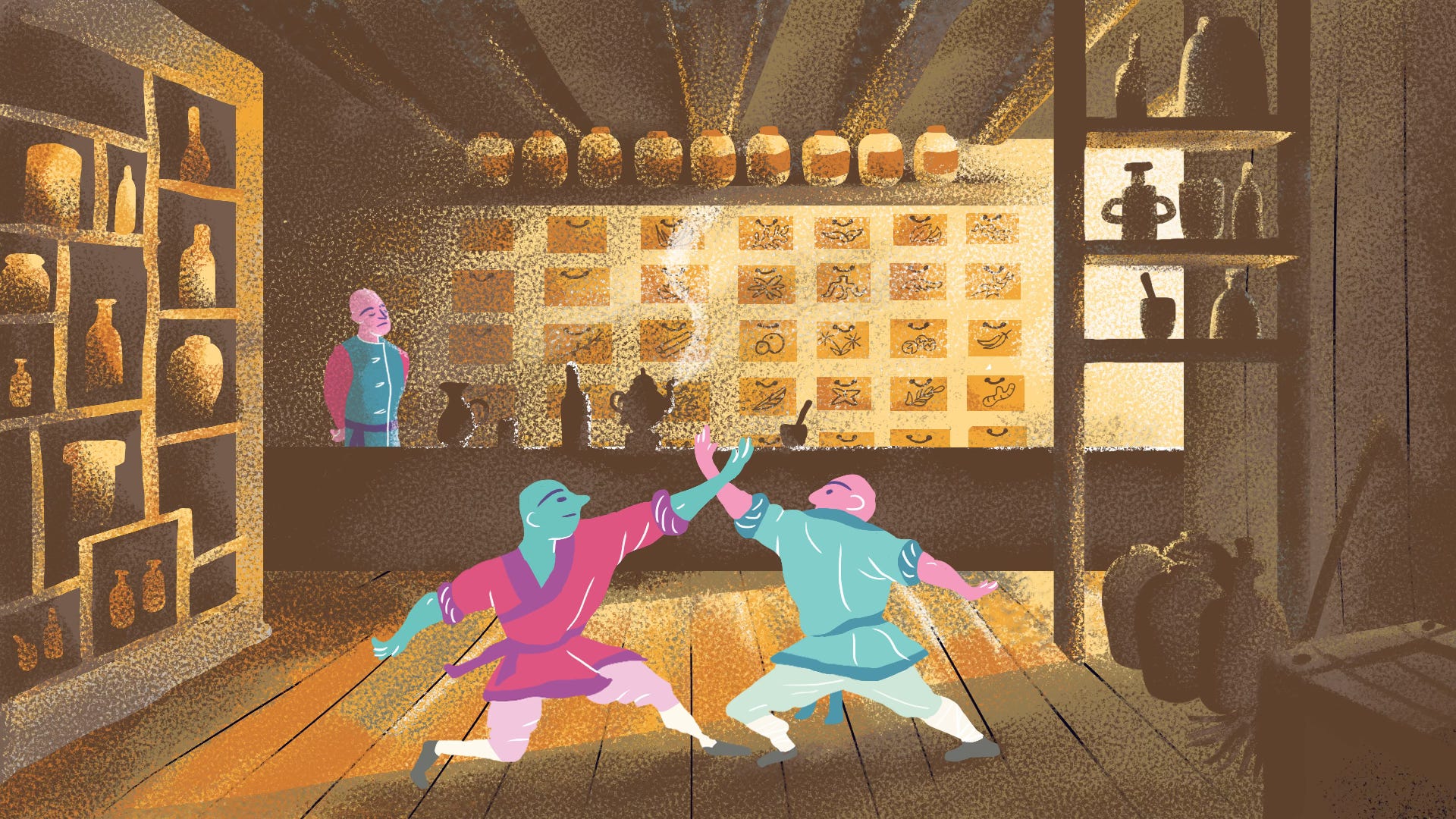
Before there were hospitals, there were healers — and in the East, especially in China, many of them were also martial artists.
In the Chinese tradition, pain medicine and martial arts have always been intertwined. The same hands that struck in training also knew how to mend. The best practitioners learned how muscles, joints, and tendons responded to force — and how to restore them when injured. A good fighter had to be a good healer.
My grandfather came from that lineage. He practiced traditional Chinese medicine not as an abstract philosophy, but as a living craft shaped by martial arts and the physical realities of pain. People came to him with twisted knees, torn ligaments, bruised backs — the everyday injuries of farmers, laborers, and martial artists.
His knowledge didn’t come from medical textbooks or university halls — it came from years of treating real injuries, guided by elders who had learned the same way. Every press of his fingers, every layer of the herbal patch, carried the precision of someone trained through experience, not theory. His patients would often arrive in pain or limping and leave walking normally a few days later. It wasn’t mysticism. It was skill and the knowledge of herbal formulas — inherited, tested, and perfected through generations.
That same philosophy continues to shape what we do today at YAPCHANKOR Pain Treatment Centre. The craft has evolved, but its core remains the same: treat the whole person, not just the pain.
Why Modern Medicine Sees Pain Differently
When I first entered healthcare, I noticed something striking: modern medicine often treats pain as something to be silenced. It focuses on suppressing symptoms — using painkillers, injections, surgeries, and short-term fixes — rather than asking why the pain is there in the first place. This approach has saved and improved countless lives. But when pain becomes persistent, chasing the symptom often leaves the root cause untouched.
This isn’t a failure of medicine; it’s a reflection of how it evolved. Western medicine grew out of a cellular, granular view of the body — breaking it down into ever-smaller parts, building treatments based on what happens inside them. This level of precision can be lifesaving. But it also risks narrowing the lens, so that pain becomes a point to fix rather than a process to understand.
Eastern traditions, by contrast, were never built from the microscope up. They emerged through centuries of observation, trial and error, and practical results. These healing systems were shaped by watching real human beings in their full complexity — how pain shows up in movement, circulation, energy, environment, and emotion. The therapies that survived weren’t based on theory alone. They endured because they worked.
This difference in origin creates a difference in perspective. Modern medicine created painkillers to remove pain symptoms. Traditional medicine instead developed through practical experimentation with herbs and techniques to not only remove pain symptoms but also to restore the functions lost from pain. One focuses on suppressing the signal; the other seeks to bring the body back to balance so the signal naturally fades.
At Yapchankor, we don’t reject modern medicine — we build on it. But we also draw from a long, living tradition that understands pain not as an isolated symptom but as part of a larger story happening in the body and life of each person.
Why This Matters Now
Pain has become one of the most common — and costly — problems in modern healthcare. Clinics are full, surgeries are rising, and painkillers are handed out daily. Yet for many people, relief remains temporary. Too often, they find themselves caught in a cycle of suppressing symptoms without ever getting better.
That’s why old knowledge matters. Not because it’s romantic, but because it was built for exactly this kind of problem — chronic pain that lingers after the pills wear off. Our tradition isn’t about rejecting science; it’s about widening the lens. When you address how pain affects movement, circulation, and balance in real life, you give the body a chance to truly recover, not just endure.
What This Substack Will Explore
This space isn’t about selling treatments. It’s about understanding pain differently — through stories, lived experience, and practical knowledge drawn from our work at Yapchankor.
Over the coming weeks, we’ll share:
Real cases and lessons from decades of treating pain in everyday people.
How traditional practices can complement modern approaches.
Reflections on what it means to heal, not just manage.
Honest conversations about where traditional methods excel — and where they don’t.
Our goal is to bring clarity and substance to an area that too often feels confusing, fragmented, and transactional. If this resonates with you, I hope you’ll follow along, share your stories, and be part of this conversation.
(This Substack reflects our experience and perspective on pain and healing. It’s not a substitute for medical advice. Please consult a qualified healthcare provider for personal medical concerns.)